Study Abroad
- UCEAP in Latin America
- Global Seminars in Latin America
- UCSD Student Stories Abroad
- Finance Your Trip
Students in Latin American studies are encouraged to participate in UC San Diego Global Seminars. UC San Diego Global Seminars are summer session global experiences led by a UC San Diego professor.
Students interested in studying abroad should see the Latin American Studies Student Affairs Coordinator to discuss their plan of study before they leave. Financial aid can be used and special study-abroad scholarships are also available.
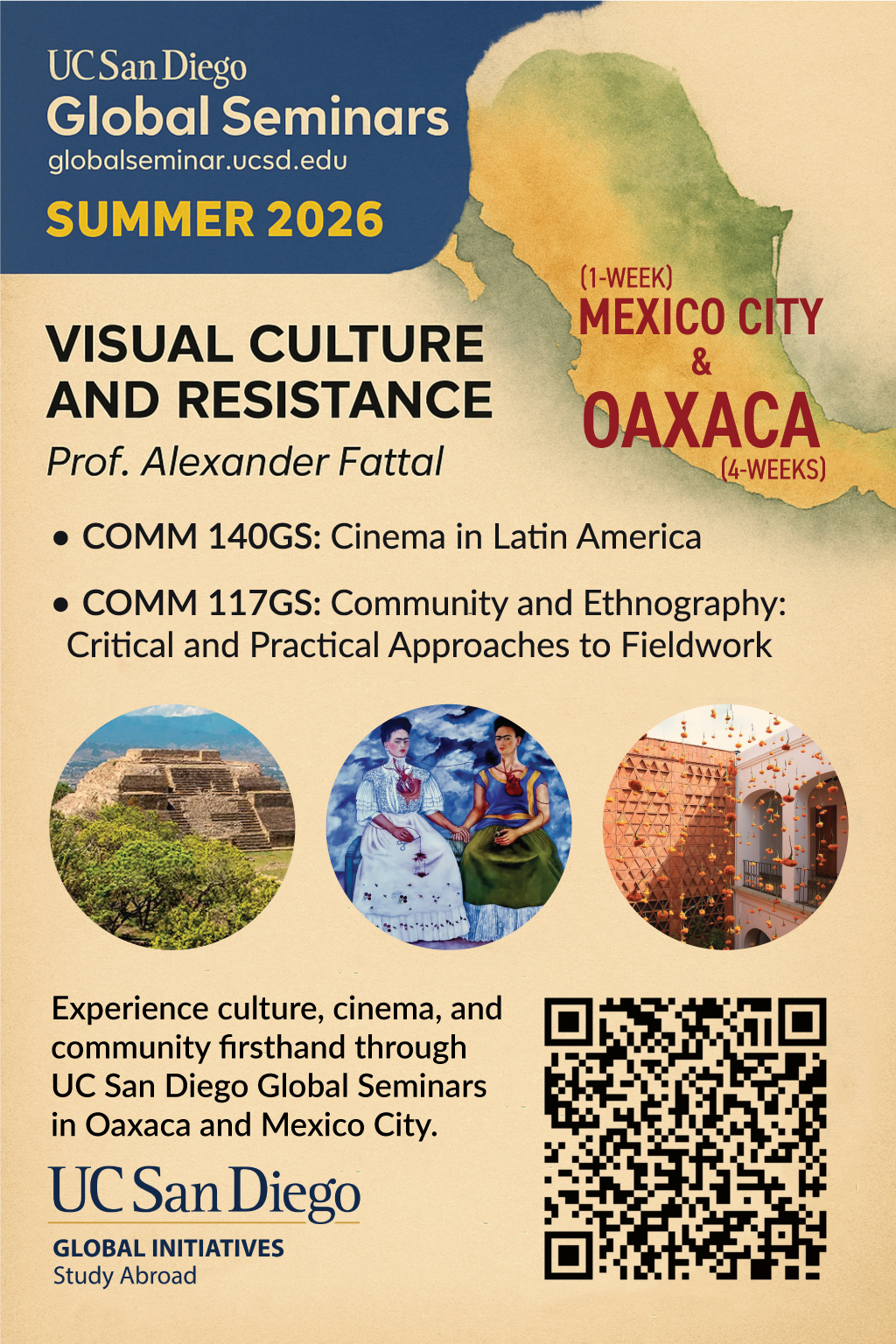
This Global Seminar begins in Oaxaca City, Mexico, a hub of Indigenous political expression and creativity, where colorful markets, street art, and community festivals provide a lively backdrop to study challenges of the contemporary moment, such as political dysfunction, migration, and climate instability. Students will engage with communities and artists producing grassroots media, visual art, film, and textiles that are part of broader struggles for justice. The final week of the program is in Mexico City and expands the view to a national contect, from historic murals to contemporary cinema. Together, these settings offer a chance to study visual culture not only in the classroom but in the streets and with communities that produce it. In the process you will forge meaningful and reciprocal relationships with people in the communities that host us.
Courses count as electives for the Latin American Studies major (COMM 117GS eligible to petition for Method requirement)

Are you interested in visiting the ruins of the world’s first refrigerated slaughterhouse? Or 19th Century taverns located in Argentina’s pampas (interior plain) to eat a meal over open fire? To converse with members of the Charrua indigenous nation, a native tribe fighting for recognition and who the Uruguayan government claims to not exist?
This program is oriented towards students interested in social justice questions from a Global South perspective. The program emphasizes links between social movements across the Americas. For example, how have transcontinental social movements thought about solving a looming energy crisis in ways that center the well-being of people and the environment of the global periphery?